
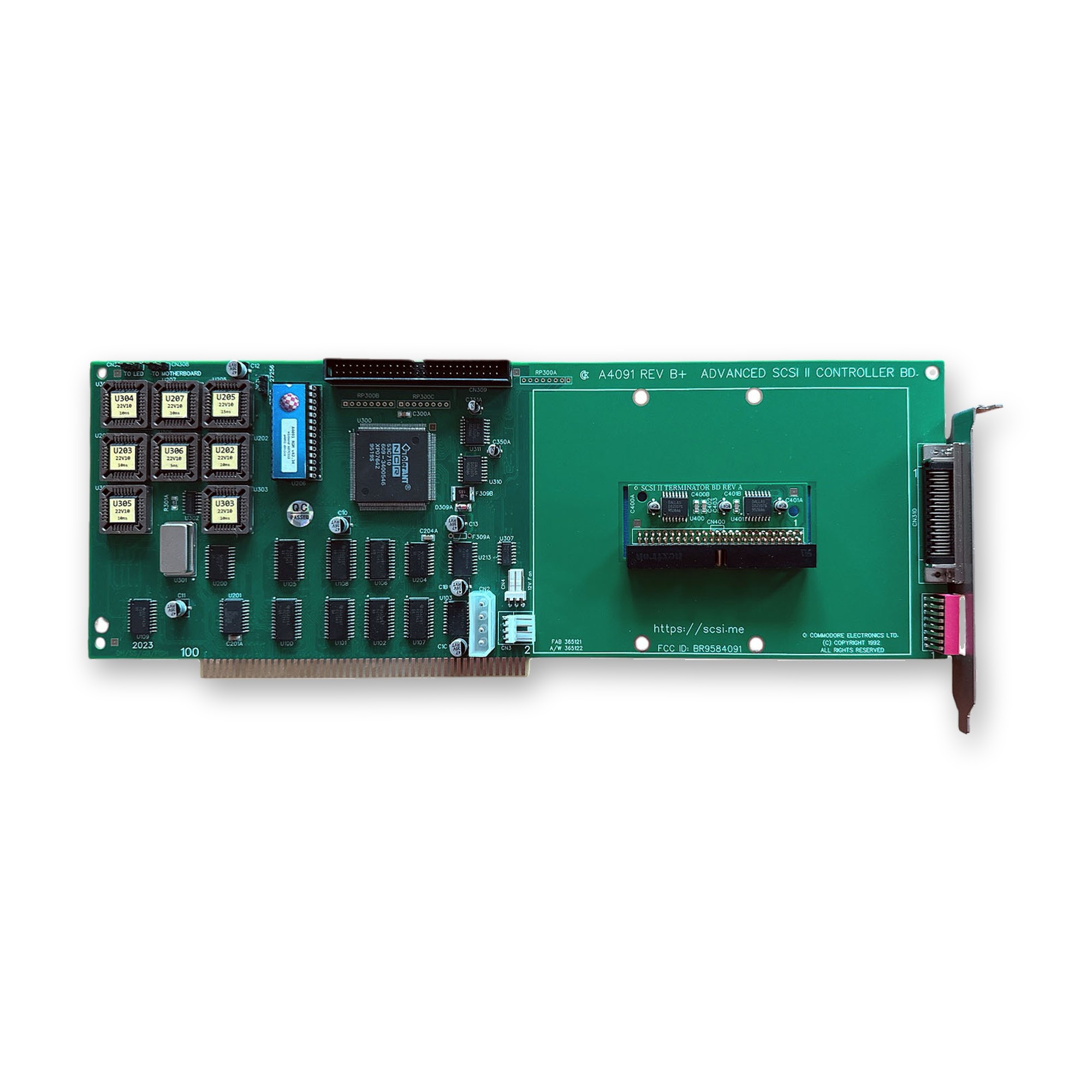
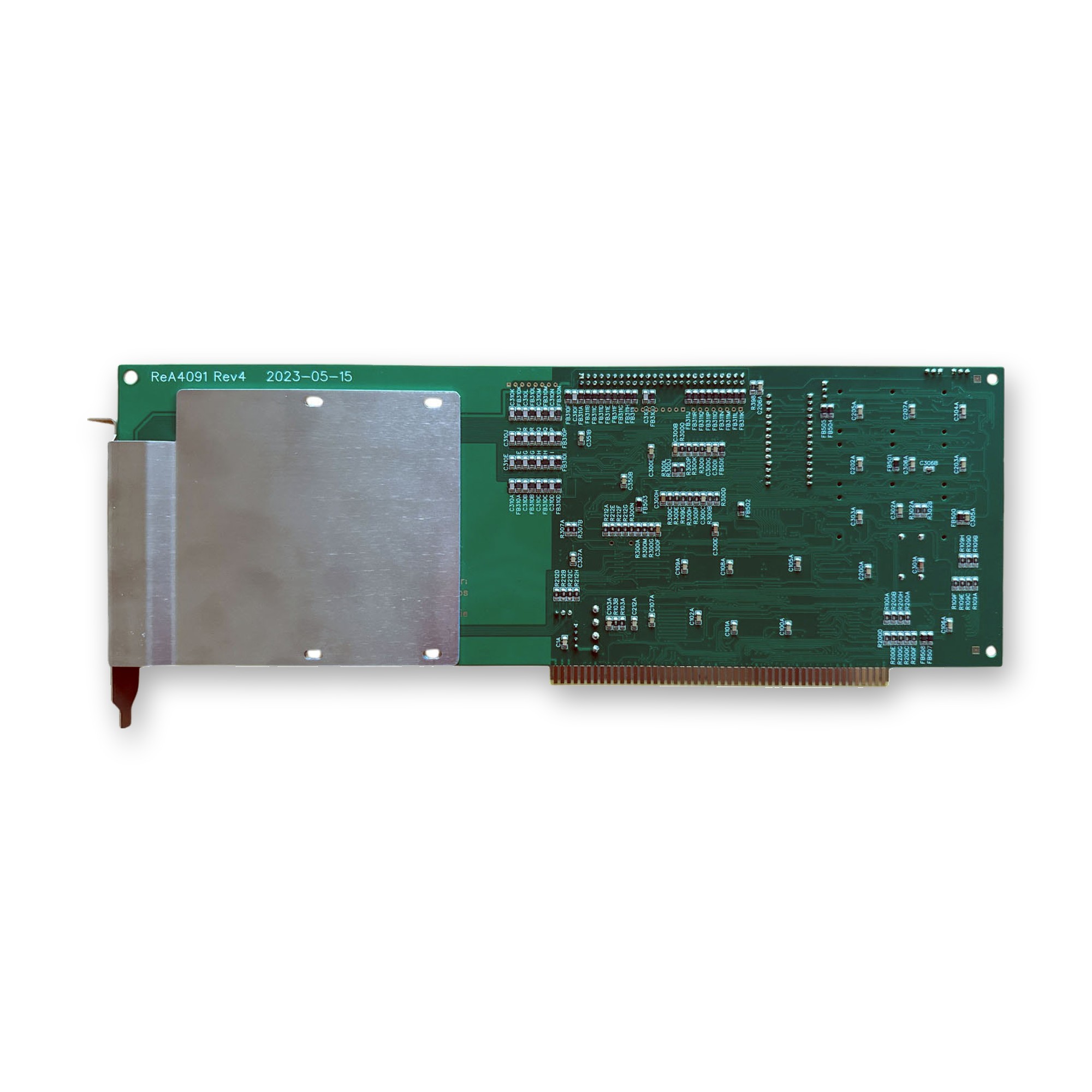
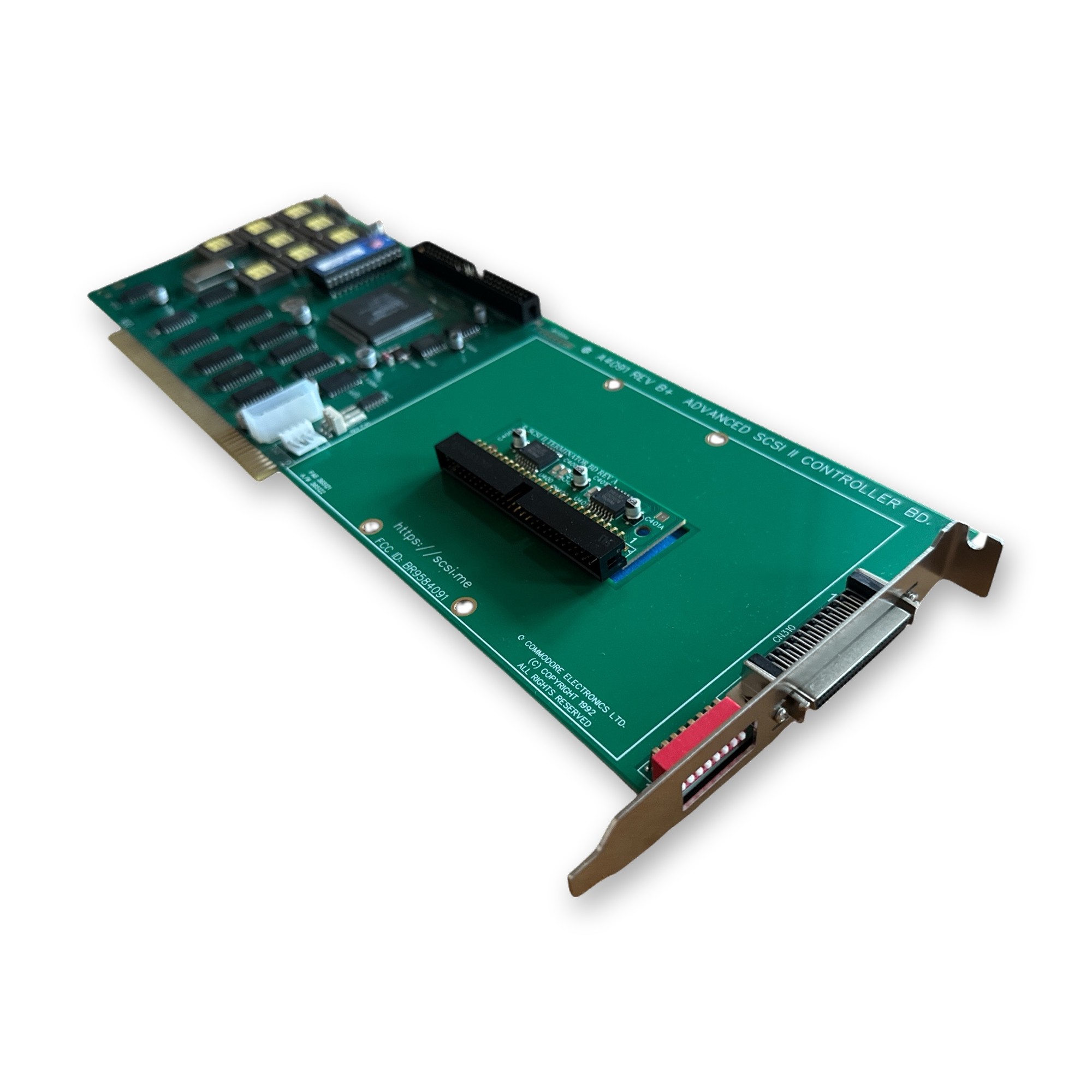
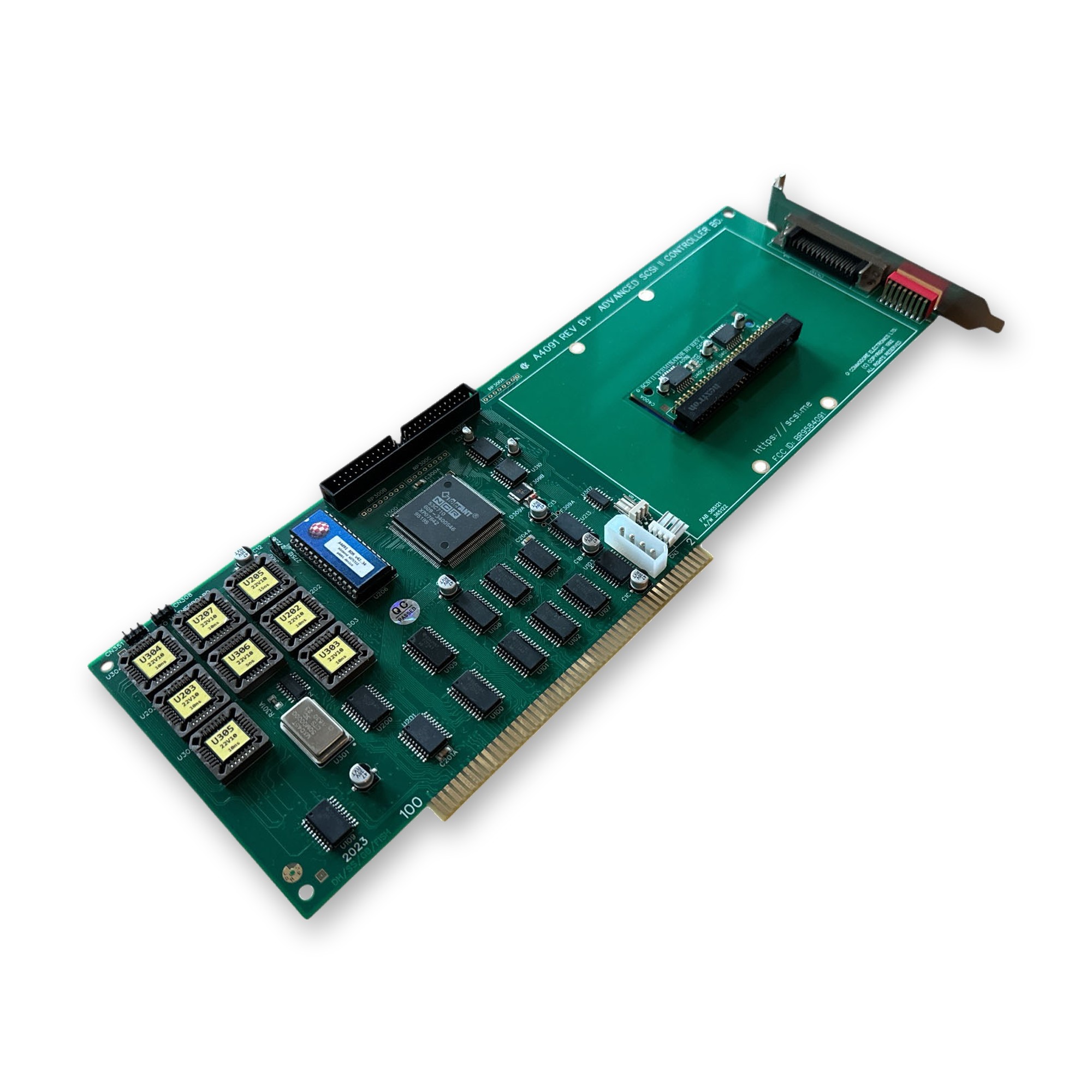
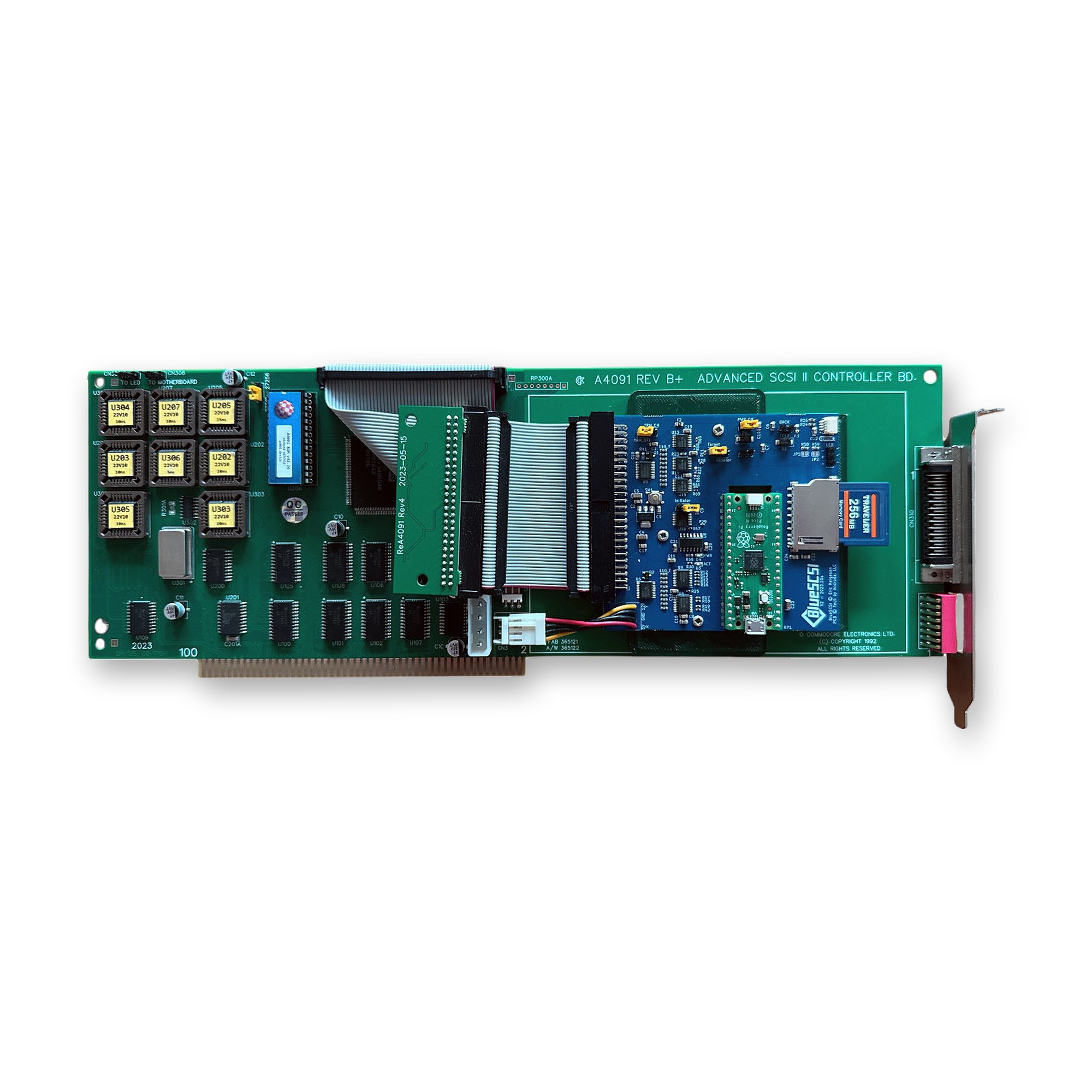
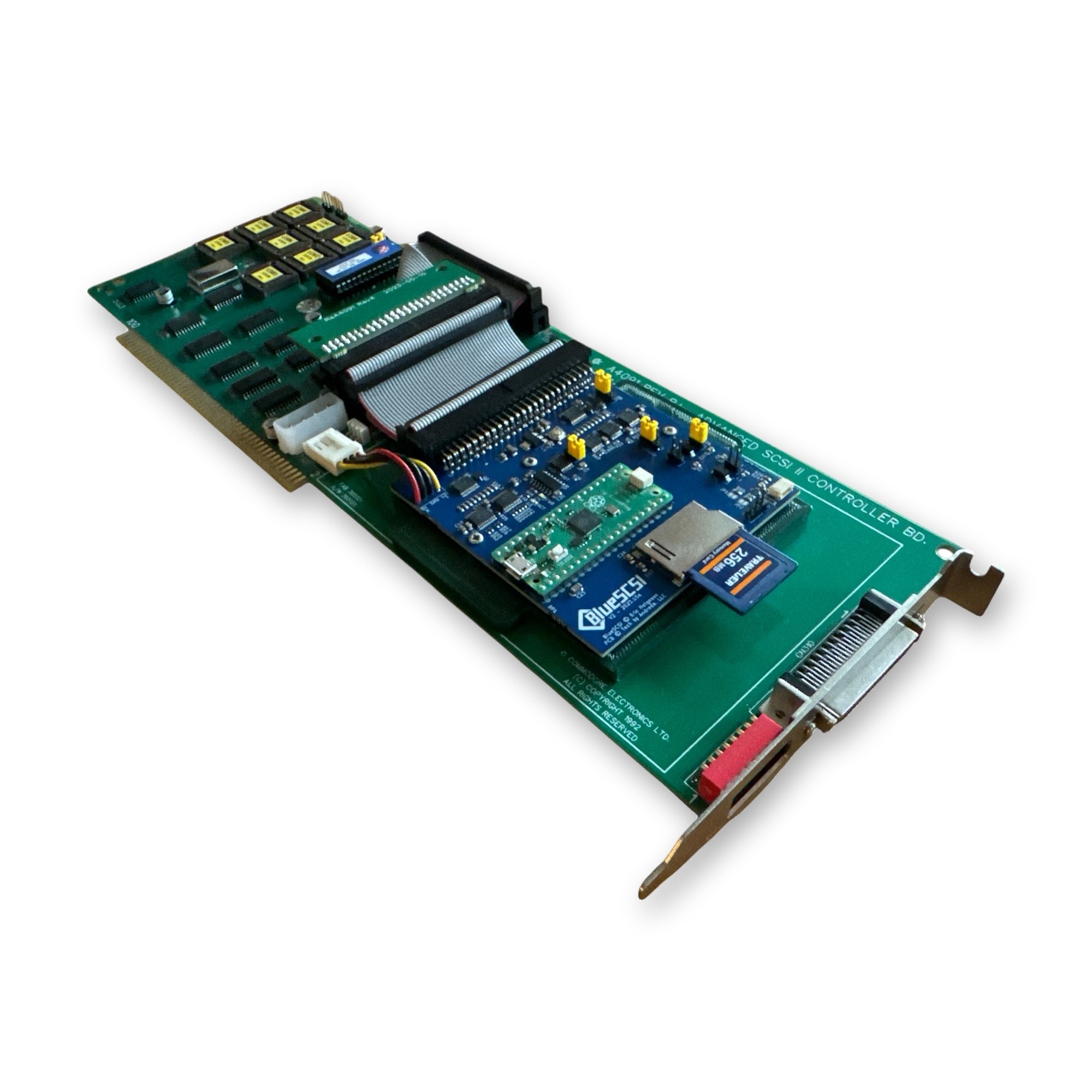
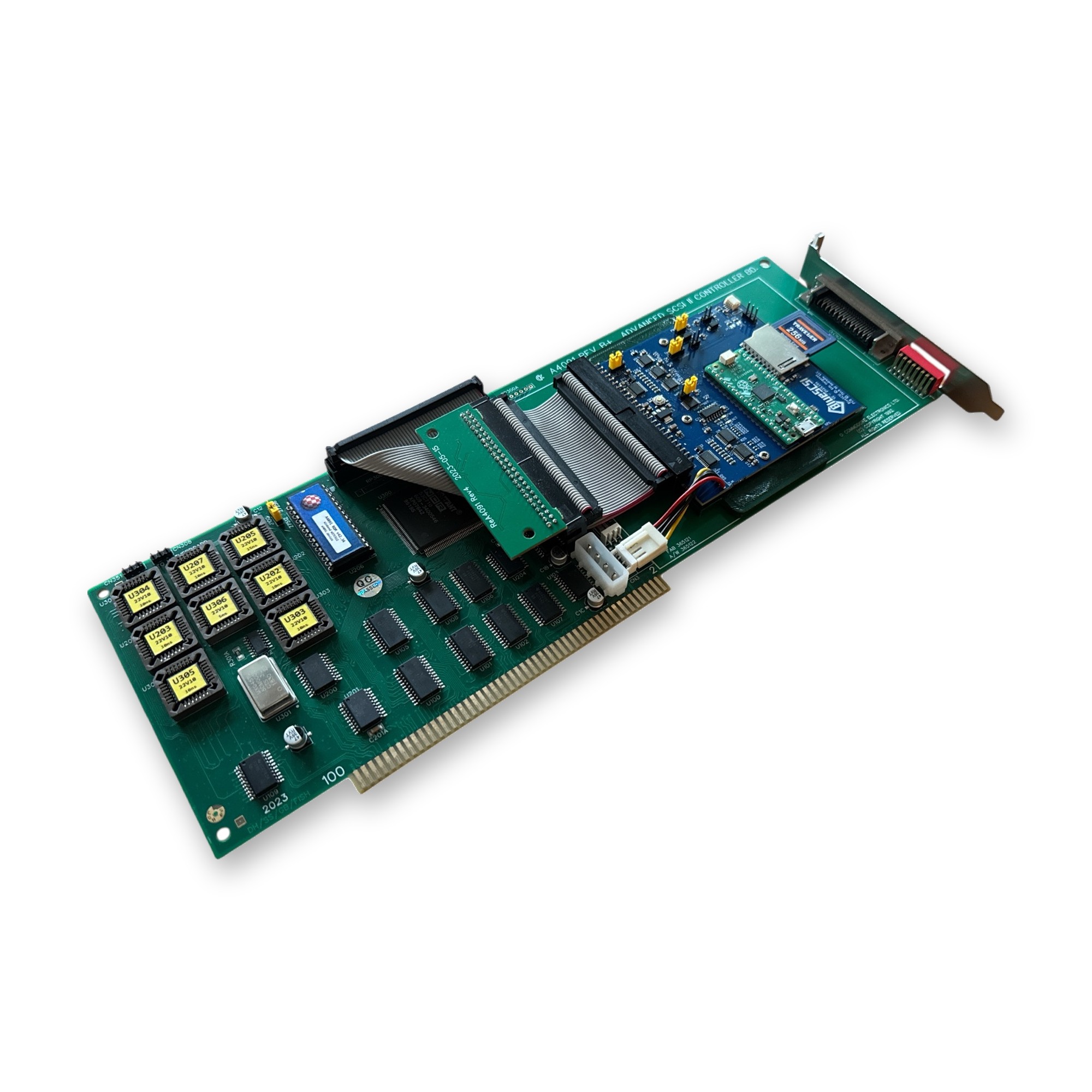
Description
Please note that your A3000(T) or A4000(T) needs a Super Buster 11 chip for the A4091 to work properly.
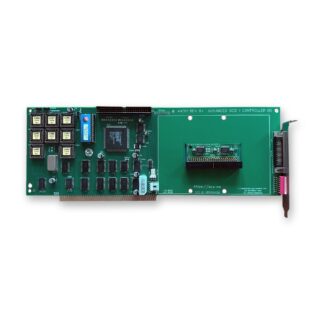
The A4091 is a full-length Zorro III DMA Fast SCSI-II hard drive controller designed for the A3000(T) and A4000(T). It is based on the NCR 53C710 chip. The A4091 package includes an active terminator.
Performance
Besides the Phase 5 Fastlane Z3, the A4091 is the only controller of its kind. It enables very high transfer rates from a SCSI hard drive or a hard drive replacement such as the BlueSCSI v2. In theory, up to 10 MB/s is possible; in practice, you can expect 6-8 MB/s, depending on the CPU model. That is around 3-4 times faster than the available Zorro II IDE interface cards.
Features
The card sold here is the full-size ReA4091, a new edition of the A4091 with additional features and bug fixes over the original A4091. The key features are:
- Fast SCSI-II controller (10 MB/s max) for Amiga computers
- One of only two Zorro III SCSI controllers ever designed
- Full-length Zorro III card with DMA
- Designed for the Amiga 4000; works in the Amiga 3000 (but please read the note below)
- Requires Super Buster 11
- Based on the NCR 53C710 chip
- Reproduction based on an old board and the PAL source code released as part of the Dave Haynie Archives
- 80 components on the top, 147 components on the bottom
- Fully open source: see the ReA4091 GitHub project
- Full-size card (the project also has a shorter ReA4091 Mini, which keeps your ISA/PCI slots available)
- Modern autoboot ROM (open source)
- TD64 and NSD64 support for hard disks larger than 4 GB
- Early Boot Diagnostics menu (press the right mouse button during boot)
- CD-ROM boot support
- Also works on original A4091 boards
Important Note for Amiga 3000 Users
The A4091 will not solve SCSI hang-ups on an Amiga 3000 upgraded with a 68040/68060 processor board. To solve these SCSI problems, you will definitely need to upgrade the DMAC chip of your Amiga 3000. Please keep an eye on the ReSDMAC project, a great effort to replace the buggy DMAC revision 2 chip with a revision 4 variant.
Credits
Many thanks to Stefan Reinauer and Chris Hooper for their tremendous efforts.
Reviews
There are no reviews yet.